|
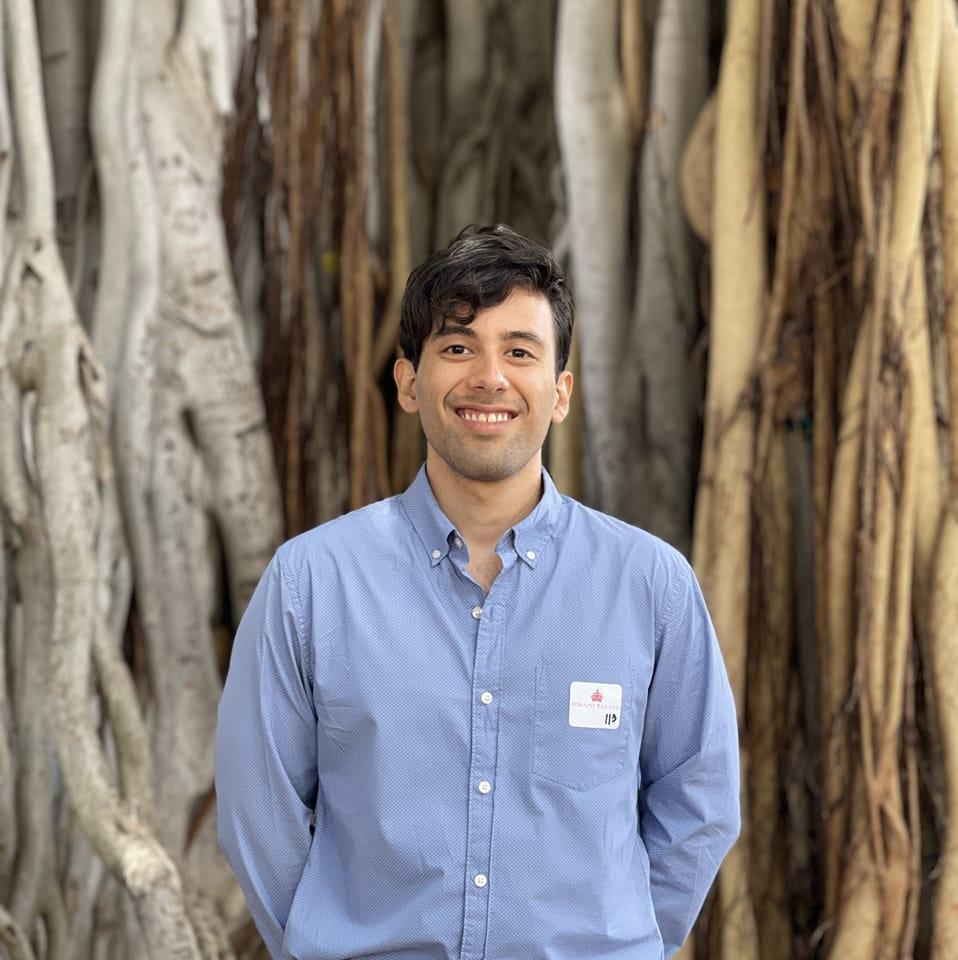
Hello! I am Ale. I am a 5th-year PhD candidate at the Stanford Artificial Intelligence Laboratory (SAIL), where I work on vision-language foundation models. I am fortunate to be advised by Serena Yeung-Levy and supported by the Arc Institute. I am deeply grateful to NVIDIA, Amazon, NIH (RO1) and Stanford HAI for believing in our team's mission generously funding our research. During my PhD, I worked part-time at Microsoft Research under the supervision of Hoifung Poon, an amazing leader, with mentorship from the incredible Jeya Maria Jose, a once-in-a-lifetime researcher. I am deeply grateful to both of them for their support. Additionally, I am an editor for the Multimodal AI for Scientific Research chapter of the AI Index and a former student lead for AI4ALL at Stanford, where I led the Medical AI section. In my free time, I’m deeply interested in philosophy and systems psychology. I also enjoy reading, cooking, working out, hiking, skydiving, playing guitar, and meditating. |
|
Recent News
|
Selected Publications(*) denotes co-first authorship. For a full list of publications, please check my Google Scholar |
|
MMBU: A Massive Multi-modal Biomedical Understanding Benchmark to Probe the Perception Capabilities of Vision-Language Models
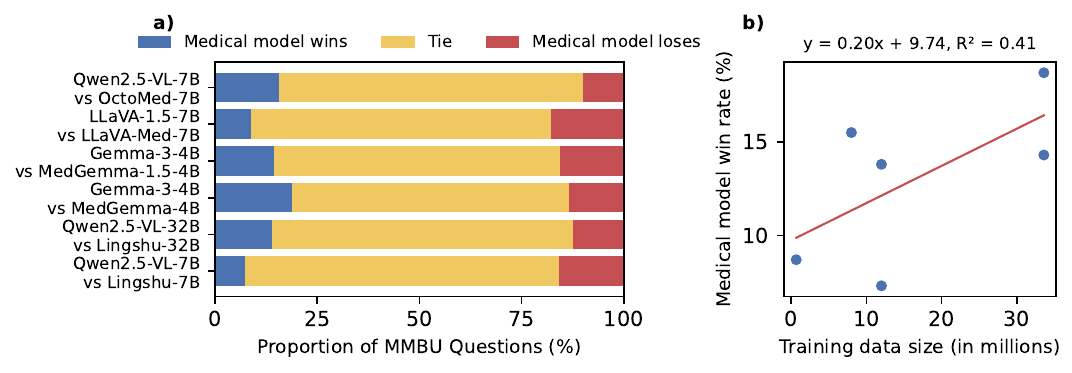
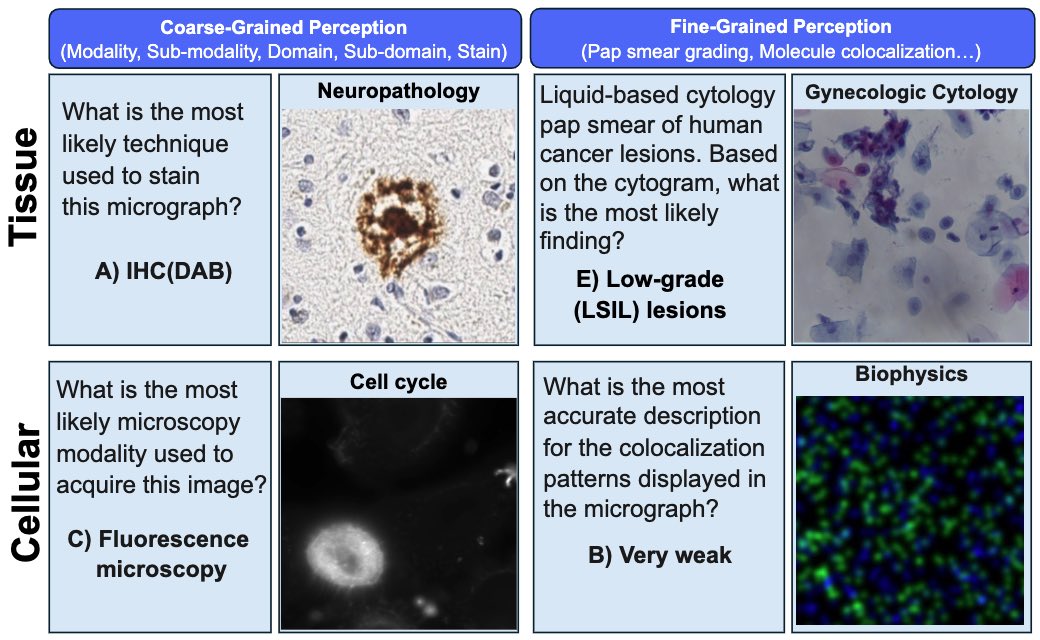
Ryan D'Cunha*, Alejandro Lozano*, Xiaoxiao Sun*, Daniel Vela Jarquin, Min Woo Sun, Josiah Aklilu, James Burgess, Yuhui Zhang, Ryan Nayebi, Paola Avila Robayo, Jin Ye, Ming Hu, Zhongying Deng, Junjun He, Xin Chen, Yue Yao, Robert Tibshirani, Jeffrey J. Nirschl, Serena Yeung-Levy ECCV 2026 / ECCV MEDFMB 2206 (Oral) project page / paper / Challenge (TBD) We introduce MMBU, the largest biomedical vision-language benchmark to test biomedical perception, covering 35 submodalities with rich structured metadata across ungrounded classification, grounded classification, and object detection. Evaluating 17 VLMs, we find that medical adaptation yields uneven gains and that strong results on established benchmarks can mask gaps in visual perception and domain generalization. |
|
BIOMEDICA: An Open Biomedical Image-Caption Archive, Dataset, and Vision-Language Models Derived from Scientific Literature
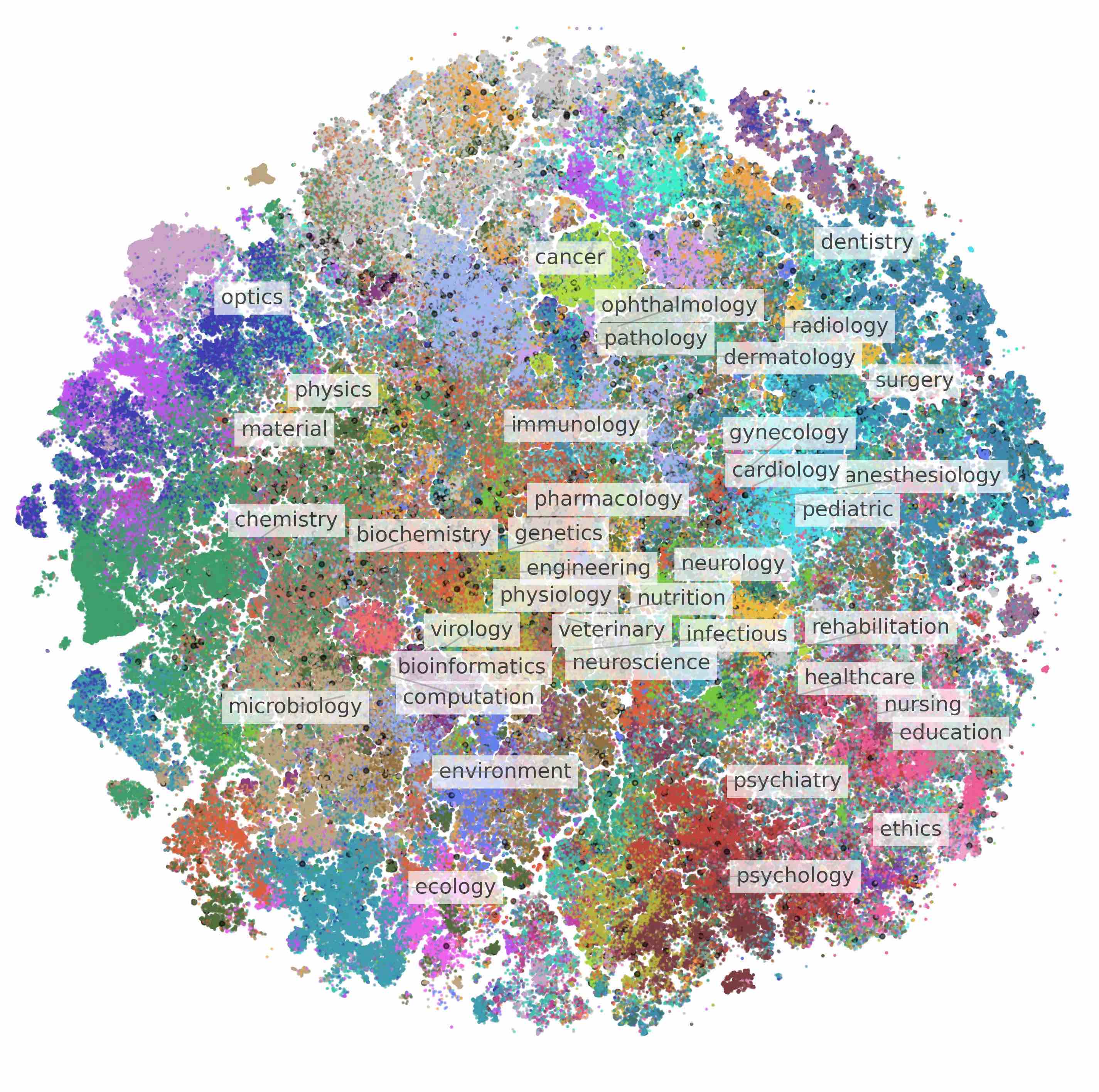
Alejandro Lozano *, Min Woo Sun*, James Burgess*, Liangyu Chen, Jeffrey J. Nirschl, Jeffrey Gu, Ivan Lopez, Josiah Aklilu, Anita Rau, Austin Wolfgana Katzer, Collin Chiu, Xiaohan Wang, Alfred Seunghoon Song, Robert Tibshirani, Serena Yeung-Levy CVPR 2025 project page / paper / code / data We introduce BIOMEDICA, a framework to transform PMC-OA into a comprehensive dataset of over 24 million image-text pairs with expert-guided annotations, enabling the training of state-of-the-art biomedical vision-language models across diverse tasks and domains. |
|
Can Large Language Models Match the Conclusions of Systematic Reviews?
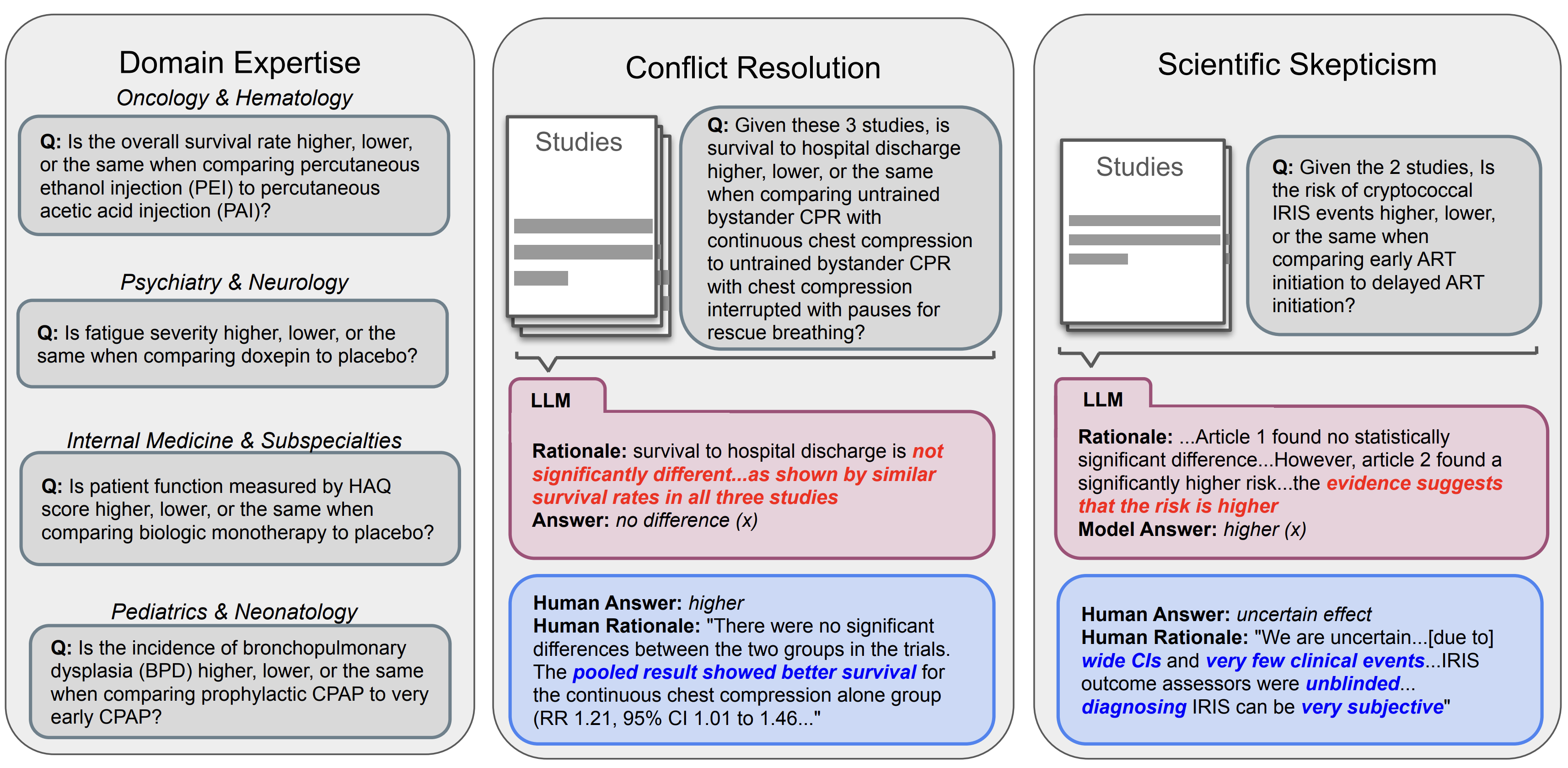
Christopher Polzak*, Alejandro Lozano *, Min Woo Sun*, James Burgess, Yuhui Zhang, Kevin Wu, Serena Yeung-Levy ICLR 2025 project page / paper / code / data Can LLMs match the conclusions of systematic reviews written by clinical experts when given access to the same studies? To explore this question, we present MedEvidence, A human-curated benchmark of 284 questions (from 100 open-access SRs) across 10 medical specialties. |
|
MicroVQA: A Multimodal Reasoning Benchmark for Microscopy-Based Scientific Research
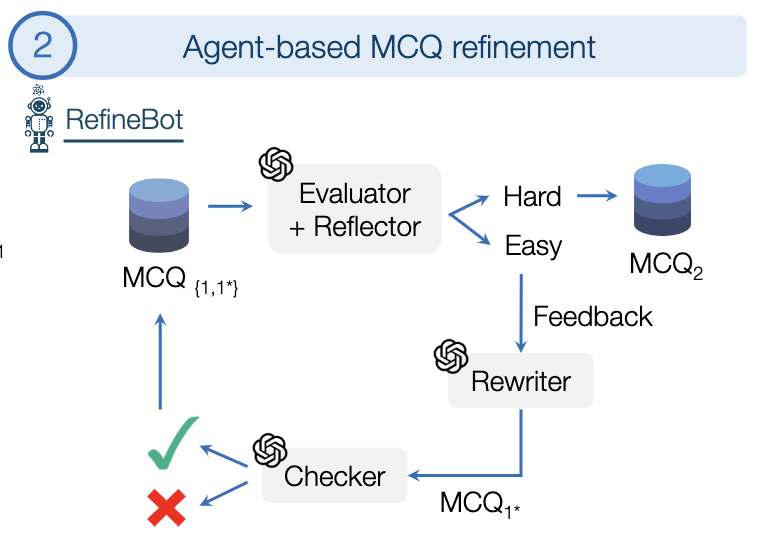
James Burgess*, Jeffrey J Nirschl*, Laura Bravo-Sánchez*, Alejandro Lozano, Sanket Rajan Gupte, Jesus G. Galaz-Montoya, Yuhui Zhang, Yuchang Su, Disha Bhowmik, Zachary Coman, Sarina M. Hasan, Alexandra Johannesson, William D. Leineweber, Malvika G Nair, Ridhi Yarlagadda, Connor Zuraski, Wah Chiu, Sarah Cohen, Jan N. Hansen, Manuel D Leonetti, Chad Liu, Emma Lundberg, CVPR 2025 paper / data MicroVQA is an expert-curated benchmark for research-level reasoning in biological microscopy. We also propose a method for making multiple-choice VQA more challenging. |
|
Time-to-Event Pretraining for 3D Medical Imaging
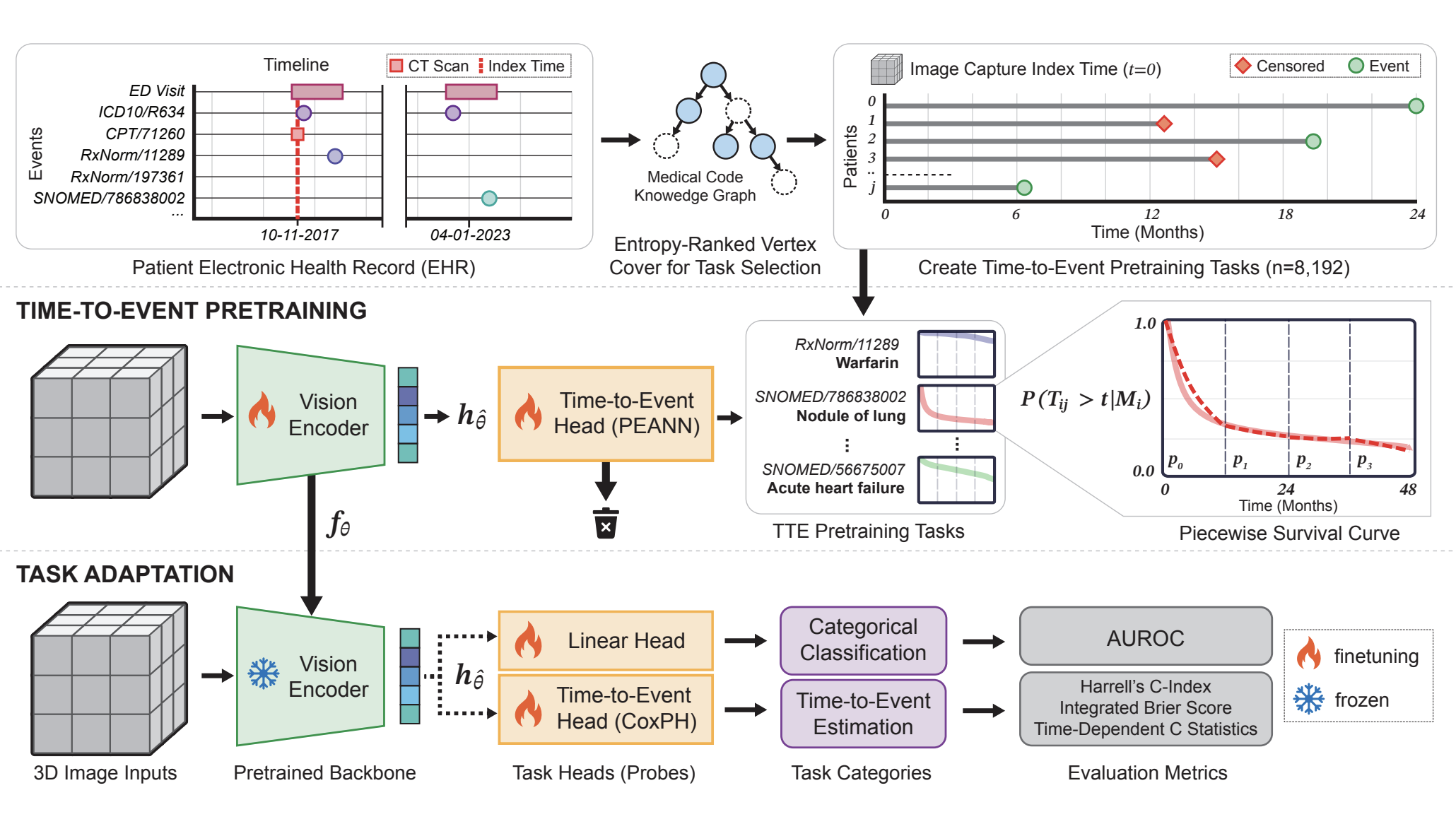
Zepeng Huo*,, Jason Alan Fries*, Alejandro Lozano *, Jeya Maria Jose Valanarasu, Ethan Steinberg, Louis Blankemeier, Akshay S. Chaudhari, Curtis Langlotz, Nigam H. Shah ICLR 2025 paper We propose the first time-to-event pretraining framework for 3D medical imaging models that leverages large-scale temporal supervision from paired longitudinal electronic health records. |
|
Video Action Differencing
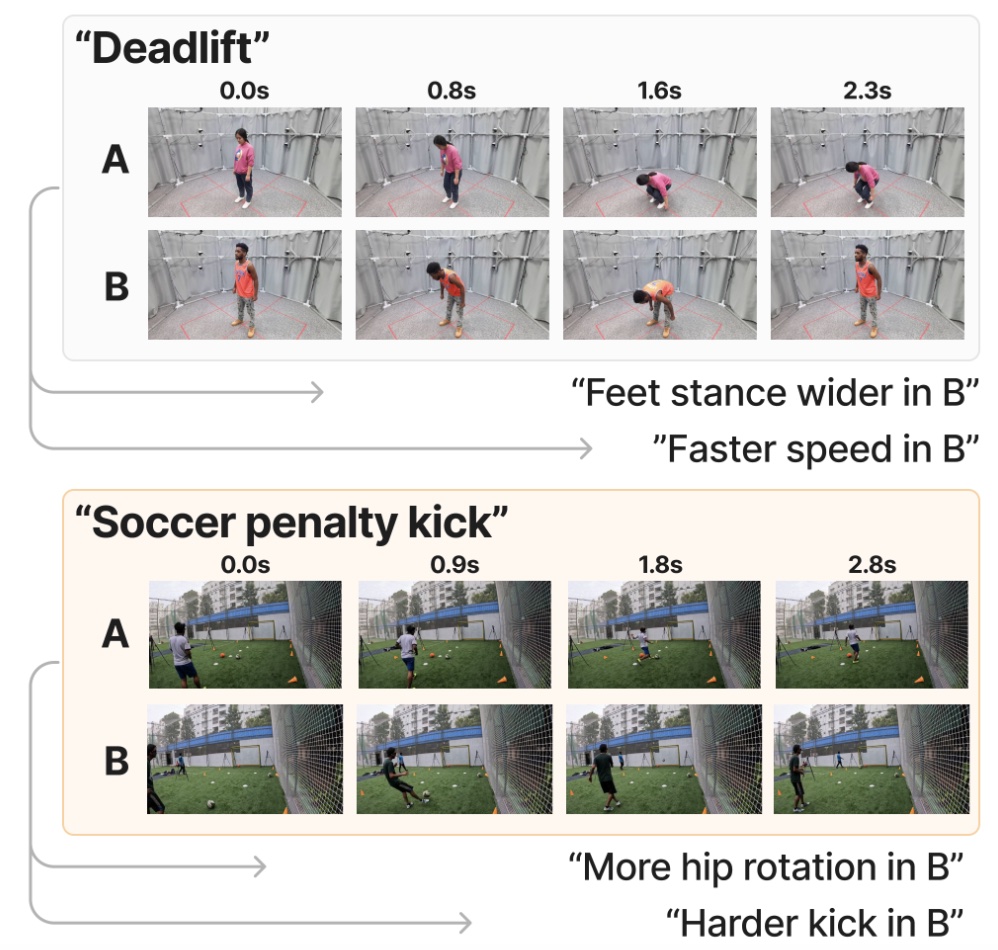
James Burgess, Xiaohan Wang, Yuhui Zhang, Anita Rau, Alejandro Lozano, Lisa Dunlap, Trevor Darrell, Serena Yeung-Levy ICLR 2025 paper / data We propose Video Action Differencing (VidDiff), a new task aimed at detecting subtle differences in how actions are performed across pairs of videos. To support this task, we introduce a benchmark spanning a diverse set of skilled actions, along with a baseline and agentic workflow to investigate the limitations of current VLMs. |
|
Micro-Bench: A Vision-Language Benchmark for Microscopy Understanding
Alejandro Lozano *, Jeffrey Nirschl*, James Burgess, Sanket Rajan Gupte, Yuhui Zhang, Alyssa Unell, Serena Yeung-Levy NeurIPS 2024 project page / paper / code / data A Vision-Language Benchmark for Microscopy Understanding, featuring 17,000 microscopy images sourced from 24 publicly available datasets. As the most diverse microscopy benchmark to date, it spans light (LM), fluorescence (FM), and electron microscopy (EM) across 8 sub-modalities, 91 distinct cell, tissue, and structure types, and 24 staining techniques. Microbench supports tasks including closed-form visual question answering (VQA), object detection, and segmentation. |
|
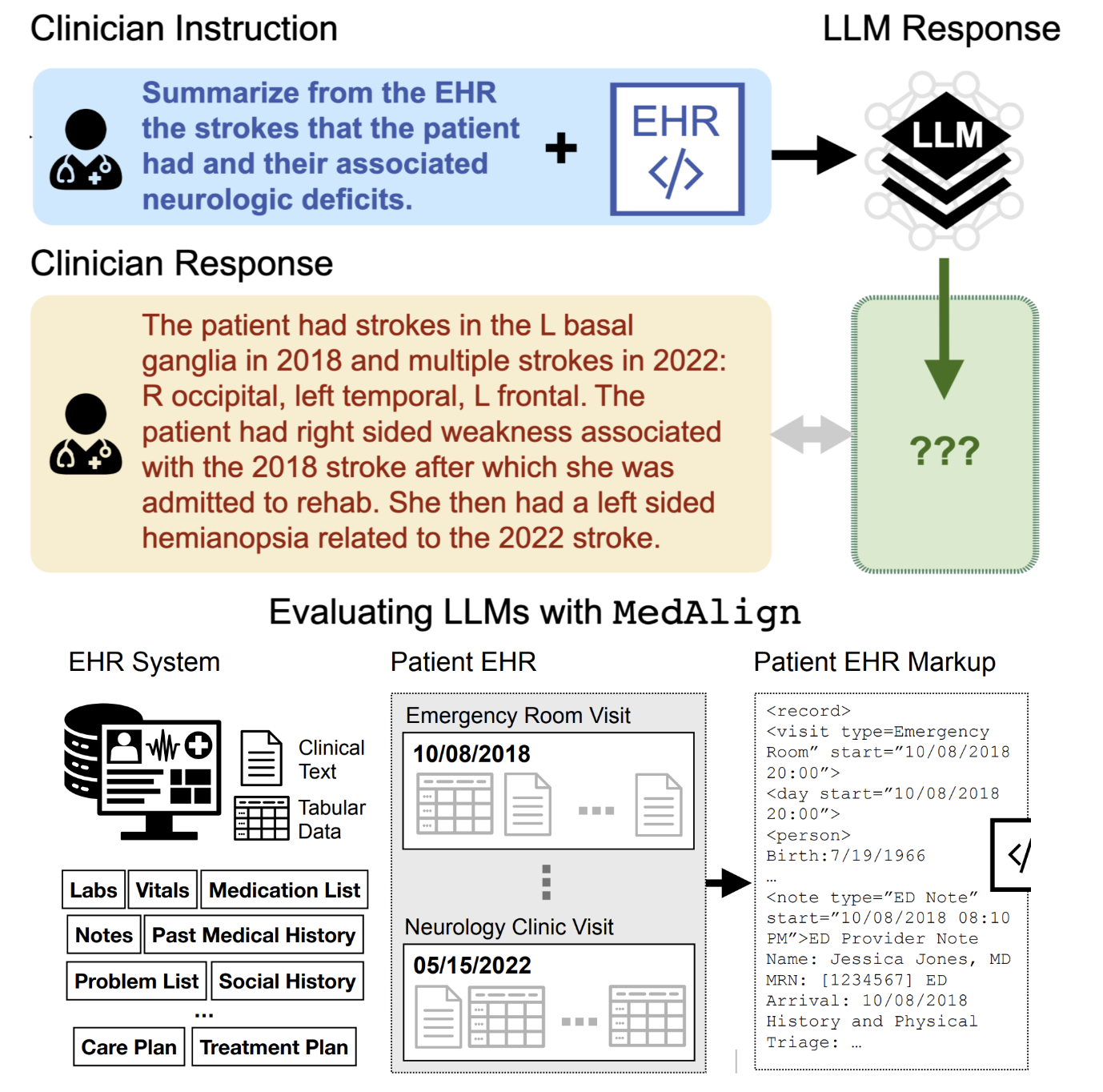
Medalign: A clinician-generated dataset for instruction following with electronic medical records
Scott L Fleming*, Alejandro Lozano*, William J Haberkorn*, Jenelle A Jindal*, Eduardo Reis*, Rahul Thapa, Louis Blankemeier, Julian Z Genkins, Ethan Steinberg, Ashwin Nayak, Birju Patel, Chia-Chun Chiang, Alison Callahan, Zepeng Huo, Sergios Gatidis, Scott Adams, Oluseyi Fayanju, Shreya J Shah, Thomas Savage, Ethan Goh, Akshay S Chaudhari, Nima Aghaeepour, Christopher Sharp, Michael A Pfeffer, Percy Liang, Jonathan H Chen, Keith E Morse, Emma P Brunskill, Jason A Fries, Nigam H Shah AAAI 2024 / ML4H 2023 (Best Paper Award) project page / paper / code / data We introduce MedAlign, a benchmark of 983 natural language instructions about EHR data. MedAlign is curated by 15 clinicians (7 specialities), includes human-written reference responses, and provides 276 full longitudinal EHRs for grounding instruction-response pairs. |
|
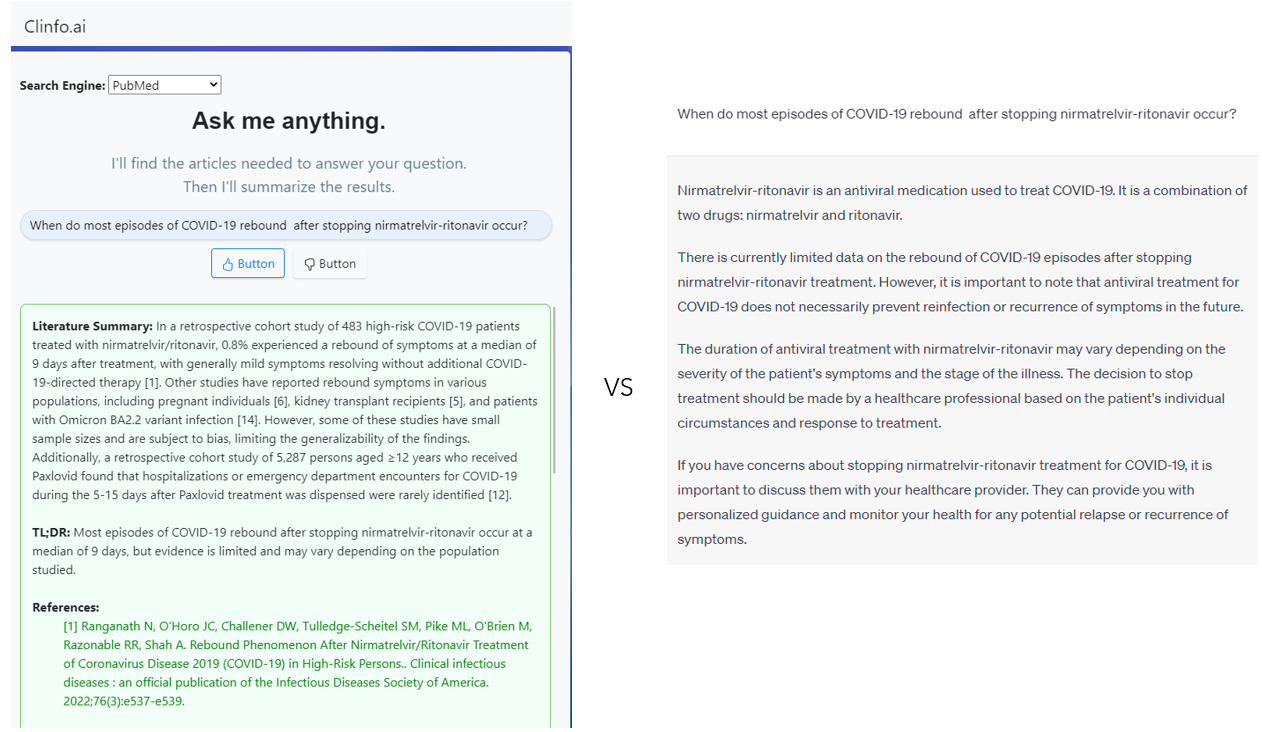
Clinfo. ai: An open-source retrieval-augmented large language model system for answering medical questions using scientific literature
Alejandro Lozano, Scott L Fleming, Chia-Chun Chiang, Nigam Shah Pacific Symposium on Biocomputing 2024 (Oral) paper / code Introducing Clinfo.ai, the first open-source agentic system designed to answer medical questions using scientific literature. Clinfo.ai employs a chain of large language models to convert a question into a query and explore the most relevant literature to provide an up-to-date answer. |
|
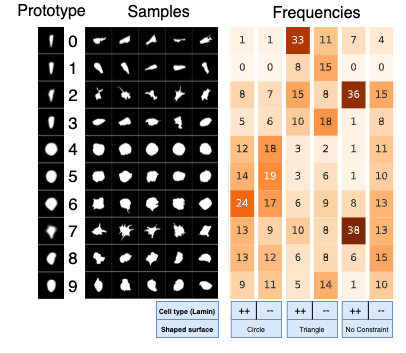
Orientation-invariant autoencoders learn robust representations for shape profiling of cells and organelles
James Burgess, Jeffrey J. Nirschl, Maria-Clara Zanellati, Alejandro Lozano, Sarah Cohen, Serena Yeung-Levy Nature Communications 2024 paper / code Unsupervised shape representations of cells and organelles are often erroneously sensitive to image orientation. We introduce O2VAE, an orientation-invariant autoencoder that mitigates this issue by using equivariant convolutional network encoders. |
Technical Reports |
|
AI Index Report 2026
Medicine Chapter Contributor Stanford HAI report / arXiv An overview on AI advancements in medicine, including scientific discovery, clinical applications, patient engagement, and ethical considerations. |

|
AI Index Report 2025
Science and Medicine Chapter Contributor Stanford HAI report / arXiv An overview of AI’s growing role in science and medicine, including scientific discovery, clinical applications, and medical foundation models. |
Teaching
|
StudentsOne of the most rewarding parts of my time at Stanford has been mentoring brilliant students. I’m incredibly grateful for their trust and for the opportunity to help them achieve their goals. I typically take on one or two Master’s students each year. While I don’t have the bandwidth to take more, I’m always happy to chat, share my perspective on PhD life, or discuss research ideas. If your interests align with mine and you’re at Stanford, feel free to reach out on Slack
|
|
I stole this website template from Jon Barron who published his source code here. |
Visitor MapSee where visitors are coming from around the world 0 unique locations visited |